
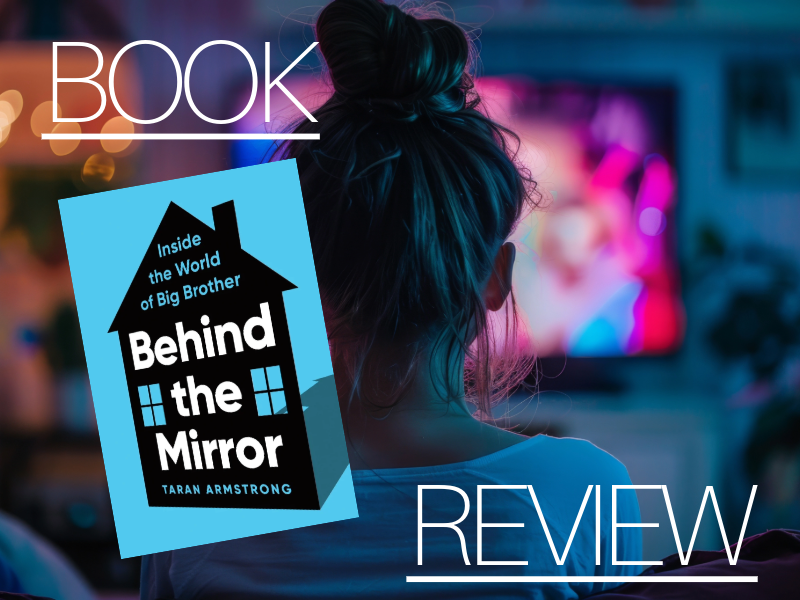
Book Review
While many people find lessons on resilience and grace under pressure on the football field, my stadium of late has been the Big Brother house. Taran Armstrong’s Behind the Mirror makes a compelling case that I’m not alone.
Armstrong, a veteran recapper of the show’s 24/7 live feeds since 2017, offers the kind of thorough-yet-distilled analysis that has made him a go-to commentator for fans who lack the time to watch the feeds themselves.
Beyond the silliness of Big Brother goofy marketing, slapstick costumes and slimy challenges, Armstrong sees “a rich landscape of social strategy, real human moments, relationships and game theory; ultimately, it is distilled reflection of the society in which it exists.” He went on: “I genuinely believe there is no other piece of media that has as much to say or teach as Big Brother does, silliness and all.”
Fans of the show are the obvious audience for Armstrong’s book, but he does an admirable job of trying to provide context and build a case that anyone interested in game theory, the human condition, or living in community can find interesting case studies among the stories that emerge from each season. While the book occasionally bogs down in the intricacies of specific game moves, such as the season 12 “Brigade” alliance, these moments are brief. Overall, Armstrong traces the game’s history and evolution with a clear and engaging hand.
The Best Part
The book is at its best when discussing the social issues which have always been a prevalent feature of the show since its beginnings: power dynamics, bullying, threats of violence, racism, subconscious bias, and gender roles. Armstrong does a great job deconstructing the surprise win of Taylor Hale in season 24. Hale started the game on the backfoot, cast as a scapegoat by houseguests threatened by her pageant background. Despite facing eviction six times, she persevered, building key relationships and defending her position to ultimately clinch the title. It’s the kind of remarkable, come-from-behind victory that any sports fan would admire—a testament to the power of turning vulnerability into strength.
Armstrong astutely analyzes how Big Brother’s unique 24/7 live feeds expose the machinery of television itself—the work of storytelling and video editing in crafting heroes and villains. The live feeds provide some comfort to the reality show players, seen as one of the most honest representations of reality within its own context—at least compared to other reality shows. “Editing film is a fictionalizing machine—you create characters and conflicts,” said Robert Thompson, founding director of the Center for the Study of Popular Television and Syracuse professor, in the book.
Armstrong uses the case of Evel Dick in Season 9 to make the point. Watching the live feeds, Armstrong couldn’t shake the feeling that Dick was mean and he didn’t like him, but when he watched the episodes, he couldn’t help but feel for him. “I remember thinking about how one person can seem like two entirely different entities at once. How the edit can take real and genuine aspects of a person and get you to empathize with them through that lens, when they could just have easily taken the worst parts of that person to make you hate them. It says something about how a reality show is edited and how we view people in general,” Armstrong wrote.
Armstrong’s Behind the Mirror is a heartfelt and insightful meditation on the human struggle to live within a society, using a guilty-pleasure reality show as its surprisingly effective cultural barometer. He succeeds in articulating what millions of viewers already feel: that behind the slime and slapstick lies a rich text about strategy, relationships, and the ethical quandaries of modern entertainment. The book proves that even in the silliest of packages, we can find a reflection of ourselves.


0 Comments